
Italian Ecoscore for Textiles: What the SNET Bill Means for Fashion Brands in Europe


Italian Ecoscore for Textiles: What the SNET Bill Means for Fashion Brands in Europe
Across the European Union, governments are accelerating measures to reduce the environmental and social impact of consumer goods, and the textile sector is at the center of this transformation.
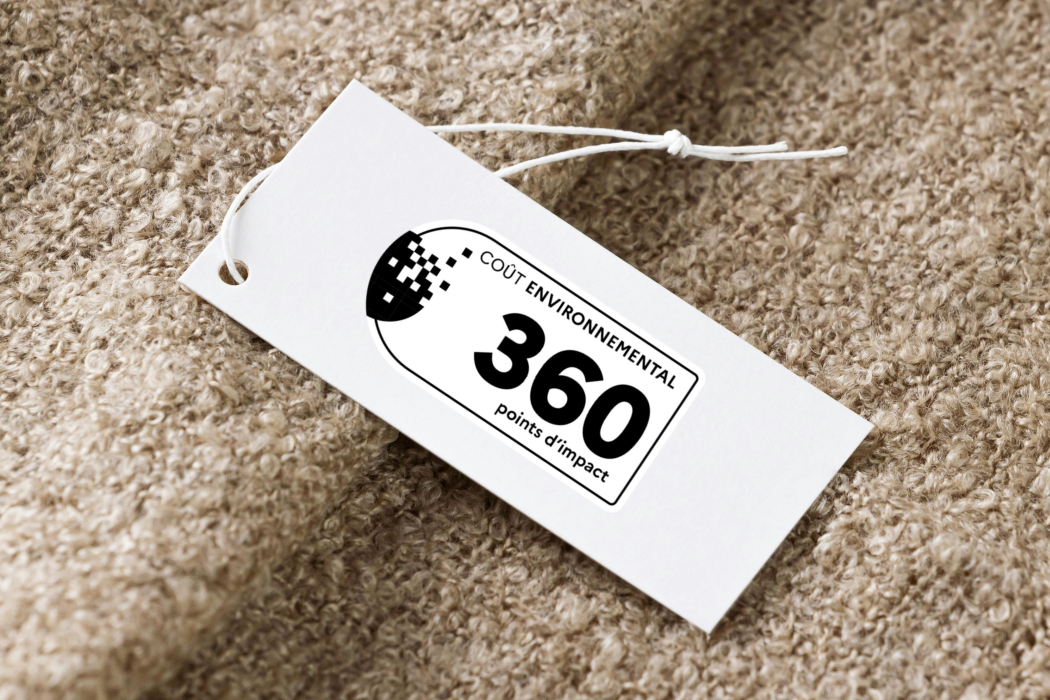
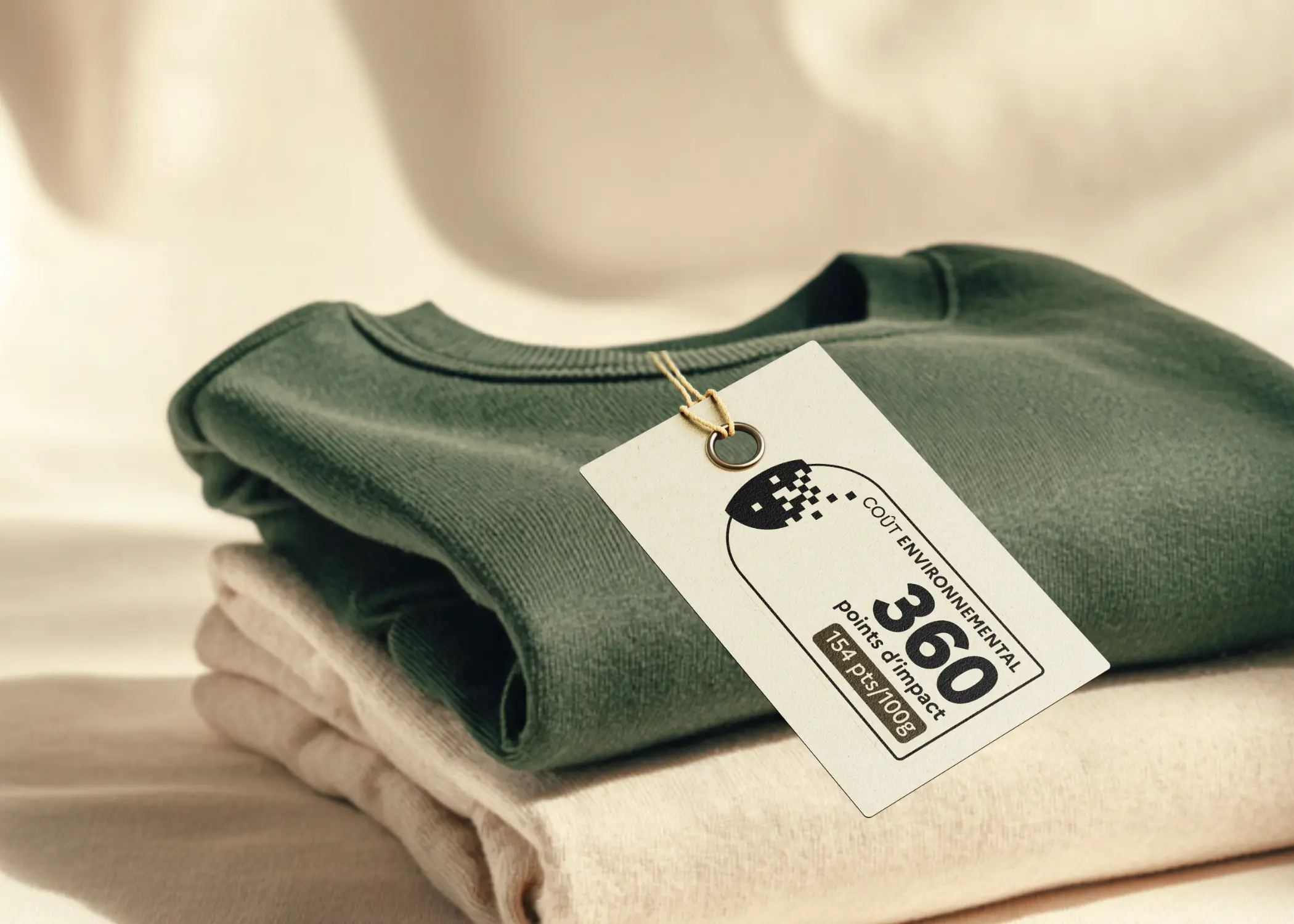
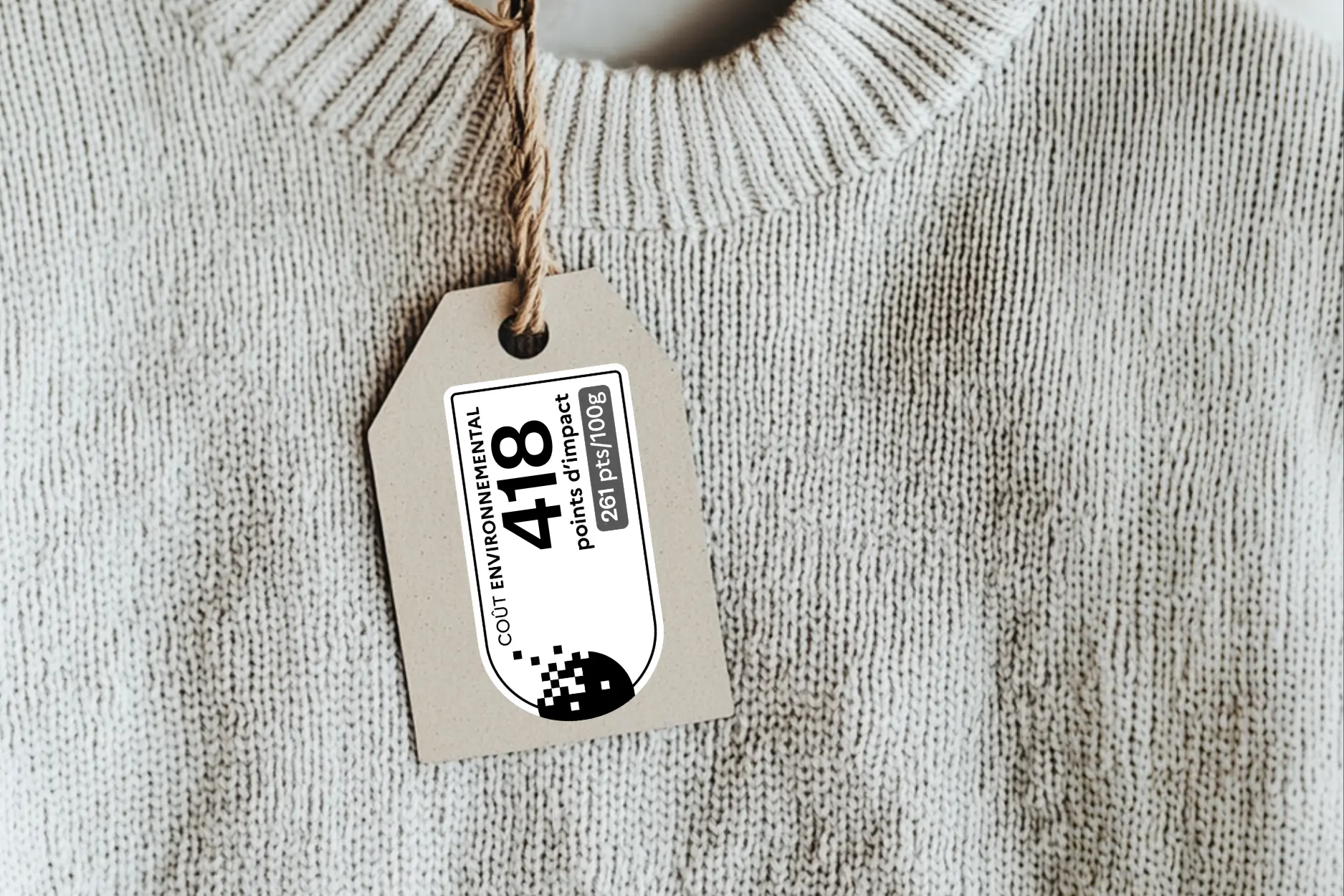
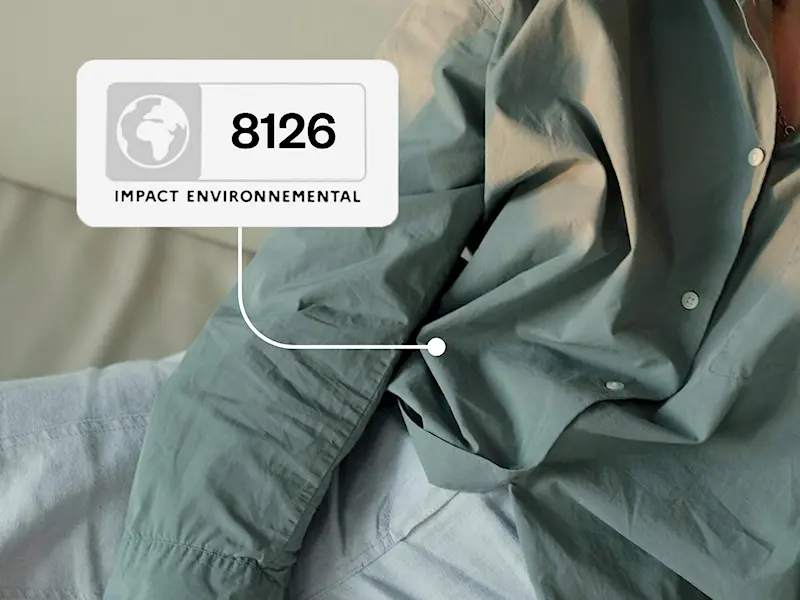
At the EU level, the upcoming Digital Product Passport (DPP) will require brands to disclose product-level data on materials, sourcing, durability, and end-of-life management. In parallel, certain EU Member States, such as France, have introduced single-score environmental labeling systems for textiles, designed to give consumers clear and comparable information about the environmental footprint of clothing.
Italy is now moving in the same direction, but with an even more ambitious framework. The Italian Senate’s bill DDL S.1690, “Provisions for reducing the environmental impact of fast-renewal fashion and combating fast fashion” establishes a national Ecoscore System (SNET) that not only ranks products from A to E but also activates legal, commercial, and fiscal consequences for products performing poorly.
This makes Italy one of the first countries in the world to connect an environmental score directly to advertising restrictions, fiscal measures, and market access.
1. Why Italy Is Introducing an Ecoscore
According to the bill, fast fashion has a growing environmental, social, and economic impact on Italy. The text notes:
- the massive volume of low-cost, short-lived garments,
- the extremely rapid turnover of new references,
- the aggressive digital marketing strategies driving compulsive buying,
- and the growing presence of ultra-fast-fashion platforms.
Italy’s textile waste statistics are alarming:
- In 2019, the sector generated 480,000 tons of waste.
- 5–6% of all municipal unsorted waste consists of textiles: over 660,000 tons yearly.
The bill also highlights serious global issues: microplastic pollution, high greenhouse gas emissions, excessive water use, and labor exploitation connected to ultra-fast-fashion supply chains.
Goals of the bill (as defined in the legal text):
- reduce environmental impact
- protect Italy’s industrial and artisanal textile system
- safeguard consumers
- counter ultra-fast-fashion imports and practices
2. Who the Law Applies To and Who Is Excluded
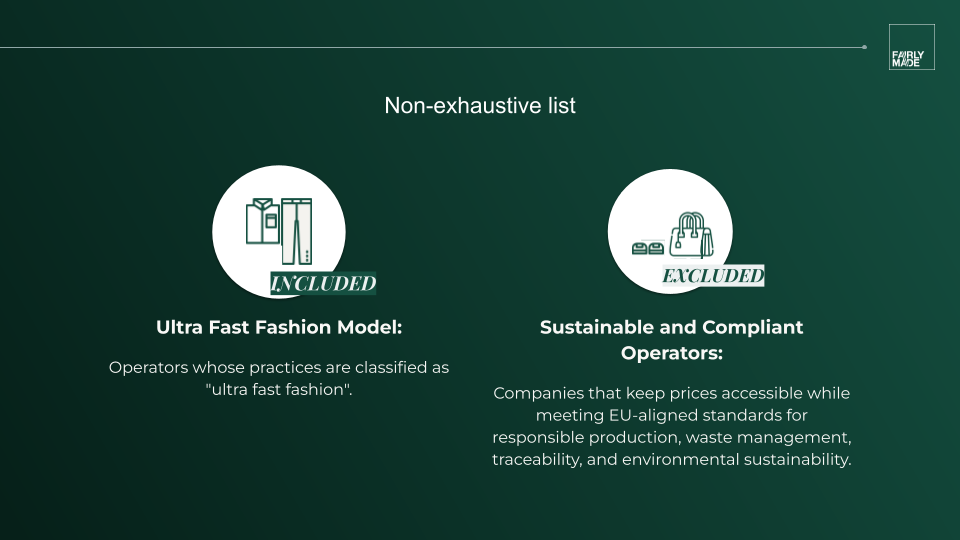
The SNET bill primarily targets brands and operators that fail to meet EU sustainability standards. This includes those that do not comply with the Digital Product Passport (DPP), Extended Producer Responsibility (EPR), or other relevant EU environmental regulations.
Excluded (not targeted by the law):
Brands operating at accessible price points but:
- respecting seasonality,
- working on traceability,
- using responsible materials,
- and with limited production waste.
This distinction is crucial: Italy is not targeting “affordable brands”, only those failing to meet basic sustainability and transparency standards. Art. 2(2) ties the scope to subjects not conforming to EU minimum environmental and traceability requirements (DPP, REP), and to entities whose practices match the ultra-fast-fashion definition.
4. Key Definitions: Fast Fashion & Ultra Fast Fashion
To regulate the sector effectively, DDL S.1690 introduces two central definitions.
Fast Fashion
A production and commercial model characterized by:
- large volumes of new references,
- released in very short cycles,
- encouraging impulsive consumption.
Ultra Fast Fashion
Defined as a more extreme category, based on criteria such as:
- > 5,000 new references per month
- Product rotation < 30 days
- No traceability or sustainability certifications
- Predominant use of low-quality synthetic materials
- No repair, take-back, or recycling strategies
- Classification D or E under the Ecoscore
The definition is designed to capture business models built on speed, opacity, and disposable design.
.png)
5. The National Textile Ecoscore System: SNET
At the heart of the bill is the creation of Italy’s first environmental scoring system for textiles, the Sistema Nazionale di Ecoscore Tessile (SNET).
Each product is evaluated on multiple dimensions that extend beyond traditional environmental concerns:
- Production conditions and location
- Material sourcing and composition
- Environmental impact of logistics and distribution
- Durability and repairability
- Social responsibility along the supply chain
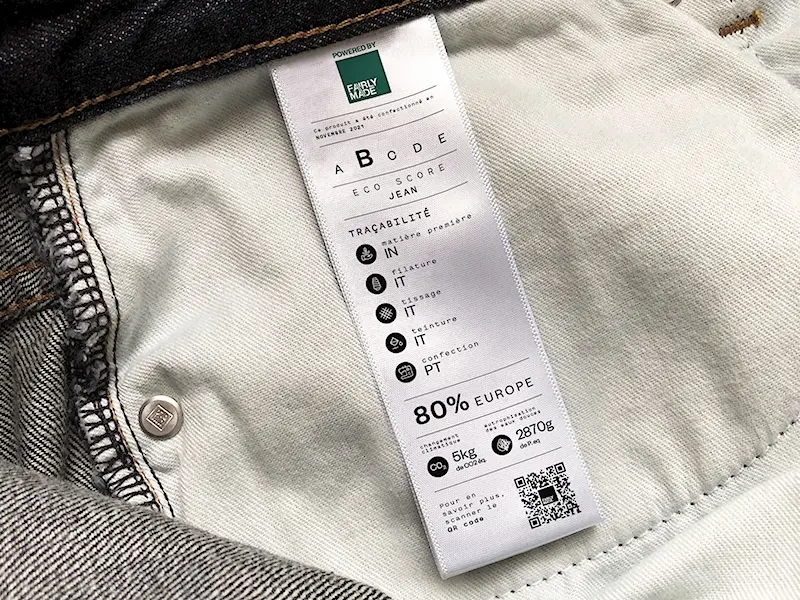
The SNET scoring system ranks products from A to E, with “A” indicating the lowest environmental and social impact, “B” and “C” reflecting moderate impact, and “D” and “E” representing the highest impact.
Brands that demonstrate transparent supply chains, sustainability certifications, DPP compliance, and EPR registration may benefit from automatic placement in the higher tiers, reducing their regulatory obligations and signaling responsible practices to consumers.
.png)
6. Advertising Ban for Fast Fashion
One of the bill’s most significant measures takes effect on 1 January 2026, although Article 10 specifies that the law formally enters into force 60 days after its publication in the Gazzetta Ufficiale.
From that date, any direct or indirect advertising of fast fashion or ultra-fast fashion is prohibited, as is the use of the term “free” in promotions that encourage overconsumption.
The restrictions apply across all media, including television, radio, print, online platforms, influencer content, digital publishers, and affiliate or sponsored campaigns.
Exceptions are limited to products rated A, B, or C, or to initiatives supporting the circular economy, such as free repair, recycling, or take-back programs. Non-compliance can result in fines of up to €100,000.
7. Transparency & Communication Requirements
Brands promoting or selling fast-fashion products online must comply with strict transparency obligations.
Brands that promote or sell fast-fashion products online are required to meet strict transparency standards. For products rated D or E, this includes providing clear environmental responsibility messages that encourage reuse, repair, sustainable consumption, and recycling, as well as displaying the country of origin next to the price with equal visibility and font size.
Companies that can demonstrate compliance with the Digital Product Passport (DPP), EPR systems, or hold accredited certifications may be exempt from these obligations, provided they jointly meet all the specified criteria. Additionally, any messaging must remain fair and accurate, avoiding confusion, misleading claims, stigmatization, or unfair treatment of compliant brands.
8. Environmental Tax on Non-EU Parcels
Italy is implementing an environmental tax on textile parcels under 2 kg coming from outside the EU, ranging from €2 to €4 per parcel (final amount determined by MEF and MIMIT). The measure is aimed at business models that rely on high-volume, low-cost micro-shipments.
9. What the Italian Ecoscore Means for Brands
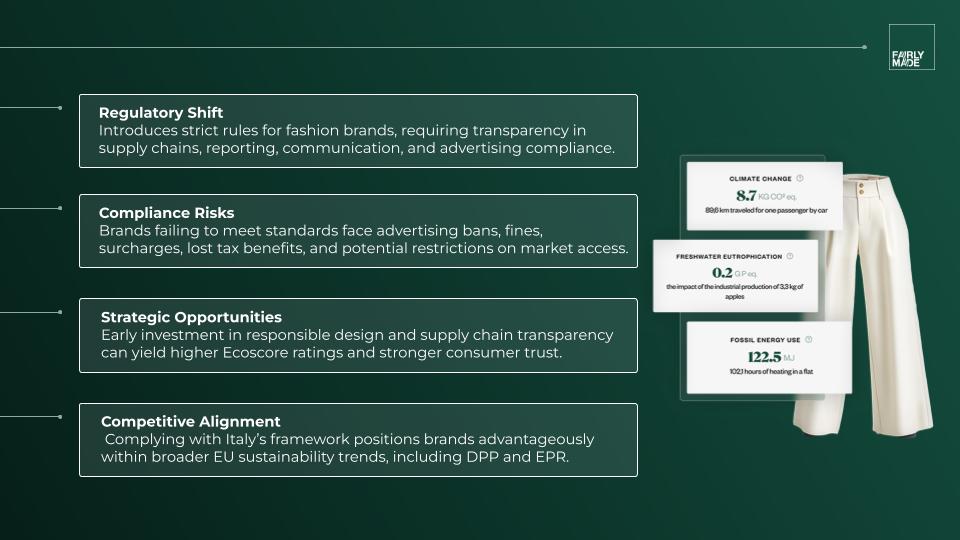
1. Regulatory Shift
Italy’s DDL S.1690 introduces strict sustainability and traceability rules for fashion brands, requiring transparency in supply chains, environmental reporting, product communication, and advertising compliance.
2. Compliance Risks
Brands failing to meet Ecoscore standards face advertising bans, fines, environmental surcharges, lost tax benefits, and potential restrictions on market access.
3. Strategic Opportunities
Early investment in responsible design and supply chain transparency can yield higher Ecoscore ratings, exemptions from obligations, and stronger consumer trust.
4. Competitive Alignment
Complying with Italy’s framework positions brands advantageously within broader EU sustainability trends, including DPP, EPR, and eco-labeling initiatives, enhancing competitiveness and market relevance.
10. How Fairly Made Can Help Brands Navigate the Italian Ecoscore
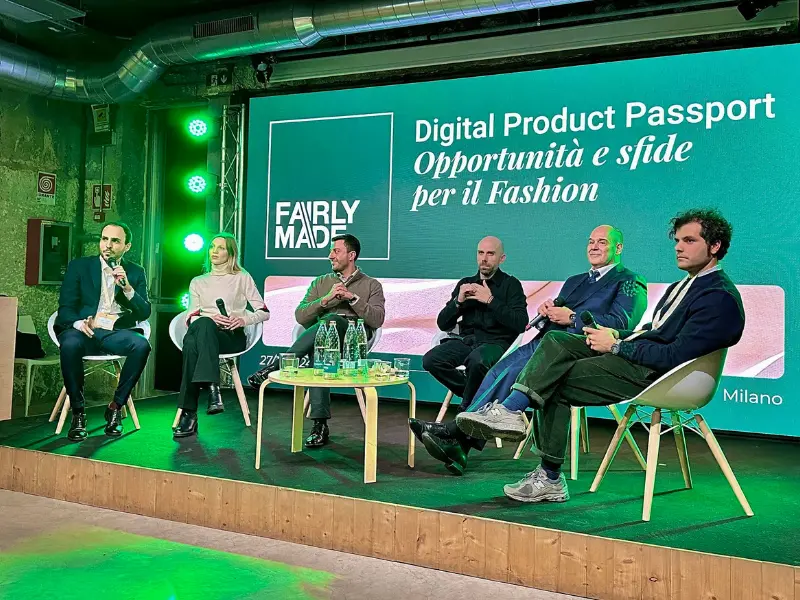
Fairly Made is uniquely positioned to support brands preparing for Italy’s SNET system. Headquartered in France, where a fashion scoring system is already in place, we have actively participated in multiple working groups on French and European impact calculation methods, giving us the hands-on experience required to guide brands effectively.
We help brands:
- Build product-level traceability: we map every step of the textile supply chain (materials, spinning, weaving, dyeing, manufacturing, logistics) enabling brands to demonstrate the traceability required for Ecoscore qualification and DPP compliance.
- Collect and structure the data required for SNET evaluation: including production locations, material composition, durability information, repairability potential, and social conditions.
- Improve product sustainability to achieve better scores: we provide concrete recommendations to help products move from D/E categories to A/B/C through material choices, supply-chain improvements, and design adjustments.
- Prepare brands for DPP requirements: because implementing these systems is a key factor in being automatically pre-qualified into better Ecoscore classes.
- Ensure compliant communication: we help brands structure online product pages, environmental messages, and origin disclosures in compliance with Article 4 and future regulations.
- Turn regulatory constraints into competitive advantages: a strong Ecoscore becomes a lever for visibility, consumer trust, and alignment with Italy’s and Europe’s sustainability agenda.
Italy’s SNET Ecoscore represents a major shift in the way environmental and social impacts will shape the textile market. By connecting sustainability performance with advertising permissions, taxes, and compliance benefits, Italy is sending a clear message: transparency and responsibility are now prerequisites for market access.
Fairly Made helps brands not only comply with these new obligations but also leverage them to build stronger, more resilient, and more trusted sustainable collections.
Comply with the latest regulations




%20for%20Apparel%20-%20The%20Ultimate%202025-2026%20Guide.webp)

.webp)



.webp)




.svg)


