🇺🇸 U.S. Tariffs & Forced Labor Brief: How to Reduce Import Risk and Protect Your Supply Chain
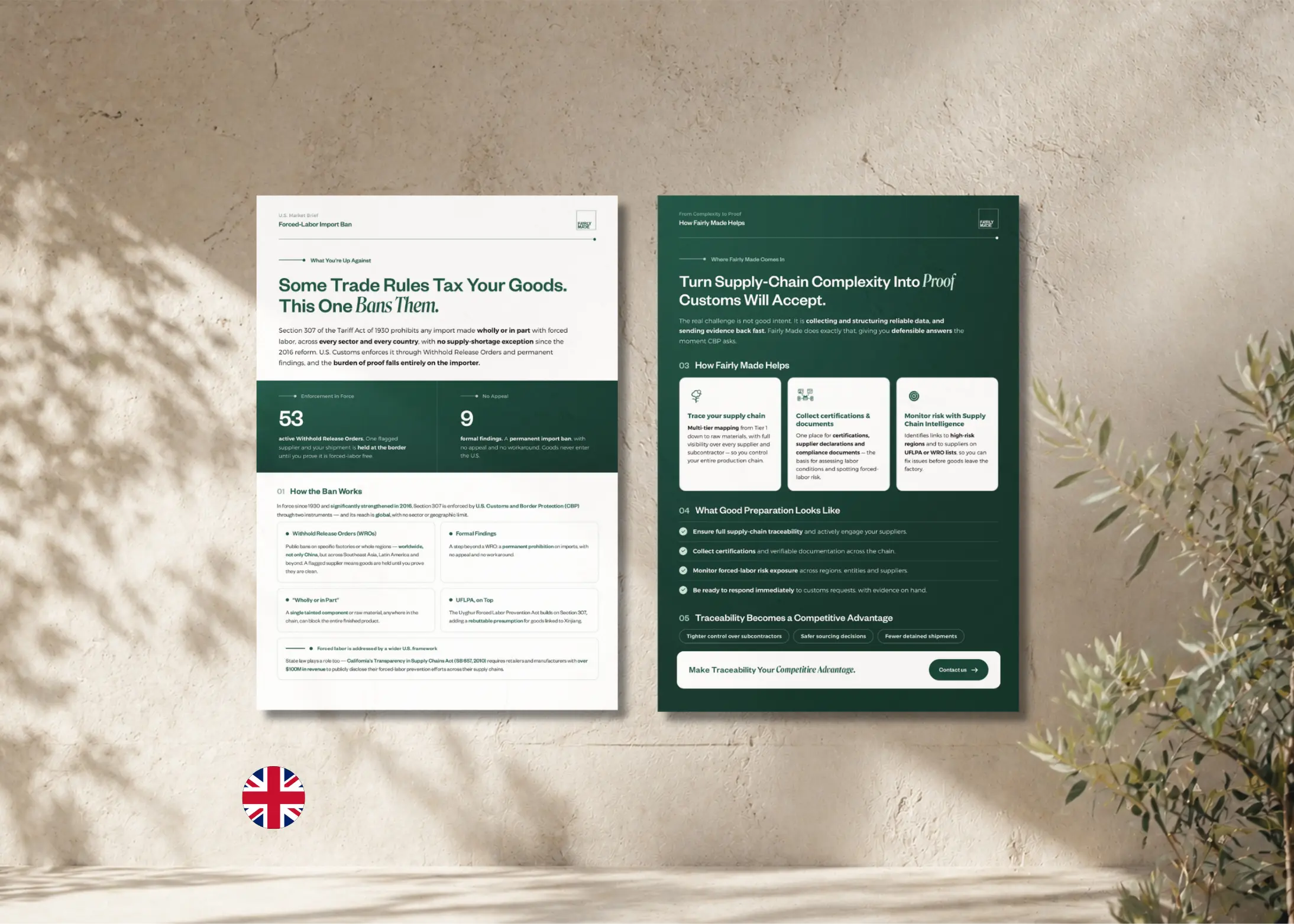
The U.S. Forced-Labor Import Ban is reshaping global trade compliance. This 2-page guide explains how Section 307 and the UFLPA impact fashion and textile brands, what puts shipments at risk, and how supply chain traceability and documentation help ensure compliance with U.S. Customs requirements.
The U.S. Forced-Labor Import Ban is one of the strictest trade enforcement mechanisms in the world and it applies to every sector, every country of origin, with no exceptions.
This 2-pager gives you a clear overview of how the regulation works, what it means in practice for fashion and textile brands, and what concrete steps you can take to be prepared.
Inside, you'll find:
- How Section 307 and the UFLPA are enforced by U.S. Customs
- What puts your shipments at risk, even when you source in good faith
- What solid preparation looks like, from traceability to documentation
- How Fairly Made helps brands structure their supply chain data to respond confidently to customs requests
A straightforward read for any brand importing into, or planning to enter the U.S. market.


About the premium content
.svg)


